
A study at Louis Stokes Cleveland Veterans Affairs Medical Center tested whether cleaning with bleach products in non-Clostridium difficile (C. diff) rooms would impact contamination, according to an article on the Contagion Live website.
Since the C. diff spores are so environmental hardy, cleaning and disinfecting is particularly challenging.
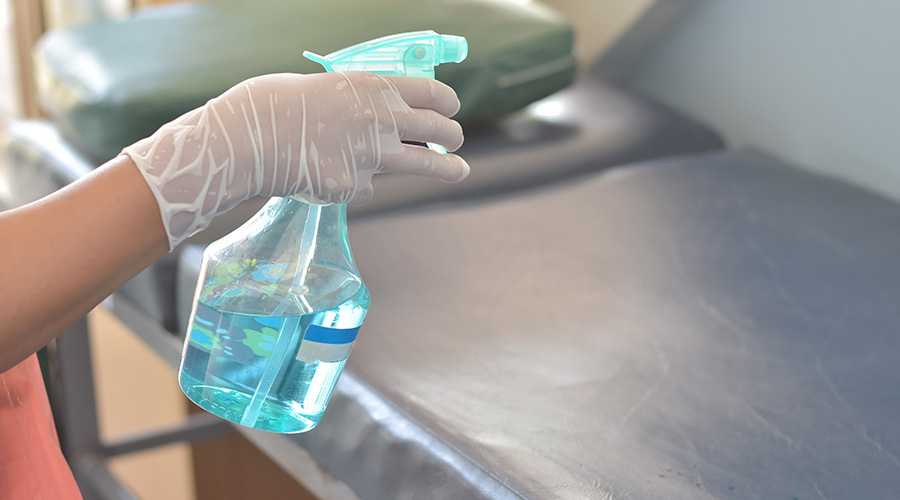
Prior to the study, daily and discharge cleaning for C. diff rooms utilized bleach wipes, while a quaternary ammonium disinfectant was used for non-C. diff rooms. In the study, investigators used bleach spray that has less corrosive effects.
The goal was to determine how many rooms had environmental contamination with C. diff spores before and after the change in disinfectants. The study found that by using the bleach-based spray for the post-discharge cleaning of a non-C .diff patient’s room, they reduced the contamination from 24 percent to 5 percent.
 Elevating EVS Professionals: The Case for Certified Hygiene Specialists
 Global Handwashing Day and the Importance of Well-Maintained Restrooms
 Duke Health and CaroMont Health Partner to Develop Two New Hospitals
 Designing for the Psychology of Waiting
 UT Health Sciences Breaks Ground on College of Medicine Interdisciplinary Building