
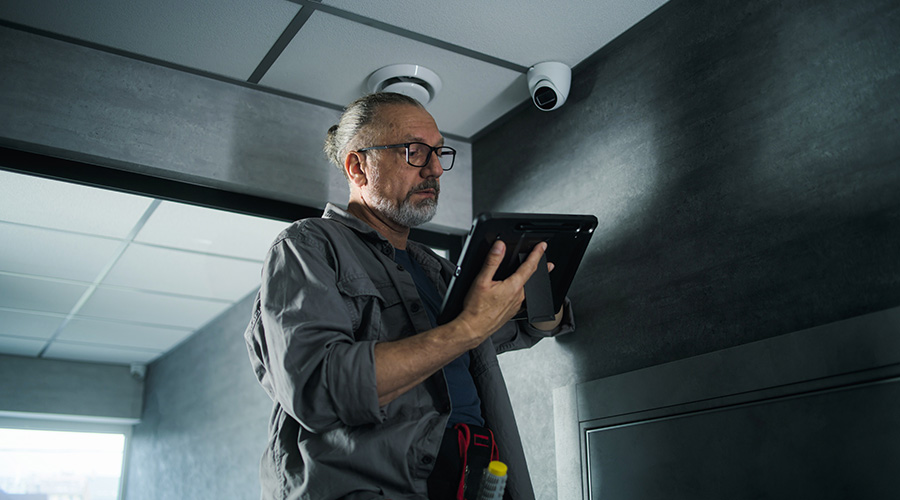
Video surveillance is critical to the hospital and healthcare environment, according to an article on the Business Solutions website. Expensive equipment, sensitive documents, pharmaceuticals, food services, retail areas, vast parking lots and structures are active 24 hours a day. Staff, sick patients, visitors, newborns, long-term care patients — some with special needs such as Alzheimer’s — all must be protected.
Complicating video surveillance at hospitals are privacy considerations mandated by HIPAA along with mandates from the Joint Commission. Video system design and installation require sensitivity to healthcare market regulations, the article said.
New camera capabilities such as enhanced privacy masking can help. For example, the door to a patient's room or an outside window can be masked electronically in a camera's image to ensure patient privacy.
Megapixel cameras are a useful tool to increase video surveillance effectiveness while minimizing costs in the hospital and healthcare environment. The two most useful megapixel camera features to help hospitals improve security are clearer, more detailed images and the ability to monitor large areas without interruption. Only megapixel surveillance cameras meet these demands.
Read the article.
 Emergency Preparedness: Building a Stronger Community
 Ground Broken on Lavine Bekenstein Cancer Hospital in Massachusetts
 Camden-on-Gauley Medical Center Reports Data Security Incident
 Elevating EVS Professionals: The Case for Certified Hygiene Specialists
 Global Handwashing Day and the Importance of Well-Maintained Restrooms